The God Who Leads - Part 2
Ministries > Unlimited Grace with Bryan Chapell
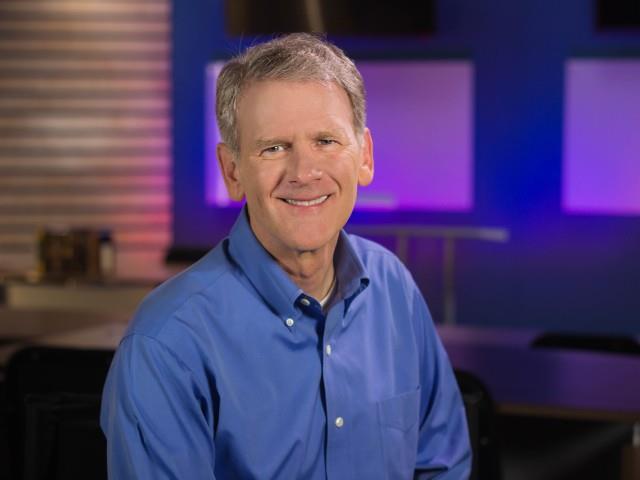
Pastor Bryan shares the second half of a lesson from Psalm 5. As we look to the scriptures, Dr. Chapell illuminates the ways the Lord leads us throughout life’s twists and turn and prepares a way for us.
Bryan Chapell: God's covenant love is abundant even for people like us. And when we observe it, worship is teaching us of that covenant love. When we sing, when you listen, when you just see the people who come and you recognize their strengths and their weaknesses, you say, "God is something else if he'll let these people sing to him."
Guest (Male): So glad you joined us for today's Unlimited Grace, the audio broadcast ministry of pastor and author Bryan Chapell. In today's episode, Pastor Bryan shares the second half of a lesson from Psalm 5. As we look to the scriptures, Dr. Chapell illuminates the ways the Lord leads us throughout life's twists and turns and prepares a way for us. You can find this lesson and many others when you visit unlimitedgrace.com. And while you're there, look for Pastor Bryan's book, *The Multi-Generational Church Crisis*. This compelling book asks the question of the church: What could be accomplished in the name of Christ if we could better understand each other? Let's hear now from Dr. Bryan Chapell as he shares the second half of the lesson, "The God Who Leads."
Bryan Chapell: The Psalmist writes in Psalm 5, "Give ear to my words, O Lord, consider my groaning. Give attention to the sound of my cry, my King and my God, for to you do I pray. O Lord, in the morning you hear my voice; in the morning I prepare a sacrifice for you and watch. For you are not a God who delights in wickedness; evil may not dwell with you. The boastful shall not stand before your eyes; you hate all evildoers. You destroy those who speak lies; the Lord abhors the bloodthirsty and deceitful man. But I, through the abundance of your steadfast love, will enter your house. I will bow down toward your holy temple in the fear of you. Lead me, O Lord, in your righteousness because of my enemies; make your way straight before me. For there is no truth in their mouth; their inmost self is destruction; their throat is an open grave; they flatter with their tongue. Make them bear their guilt, O God; let them fall by their own counsels; because of the abundance of their transgressions cast them out, for they have rebelled against you. But let all who take refuge in you rejoice. Let them ever sing for joy, and spread your protection over them, that those who love your name may exult in you. For you bless the righteous, O Lord; you cover him with favor as with a shield." Let's pray together. Father, as we see young adults preparing to go into a world with training that they have received, our prayer is that you would be guide, shepherd, and shield to them. Help us by your Word, by what we as a church believe and teach, to be those who carry that message of a grace that is beyond them, so that whatever phase of life you take them into, they truly know that you are a God who provides for those who cannot provide for themselves. And you do so generously and without reproach, so that when those who are in need come, they are confident they come to a good, good Father. Grant that we would know it and fountain it to the generations, we pray. In Jesus' name, amen. One of the marks of adolescence is to equate permission with love. "Well, if you really loved me, you would let me go to X. If you really loved me, you would let me date X. If you really loved me, you would let me have that car." And so we begin to equate love with permission. Whereas if you move into adulthood even a little bit, you recognize that love with no warning, love with no prohibition, is not love at all. It's just not caring. God says, "I care enough to warn." And in these warnings, he is telling us of all the things that are the guardrails to help us on the path of life. But then he tells us something else. If the warnings are the guardrails and we're trying to travel down the path that is good for us, where are the headlights? As it were, that's verse 7. As God is talking about the headlights of his guidance, which comes from all things, it comes from worship. Do you see that in verse 7? "But I, through the abundance of your steadfast love, will enter your house. I will bow down toward your holy temple in the fear of you." In worship, we learn of the abundance of God's love. Now, there are people who say, "I don't need the corporate worship of God's people. I'm going to worship God in the woods; that's where I see the beauty of his creation." And you can actually do that. If the heavens declare the glory of God, then creation is one place you see the glory of God. But in worship, what are we meant to see? The abundance of God's love. The word "love" there is the Hebrew word *hesed*, which means covenantal love as opposed to contractual love. Contractual love says, "If you love me, I'll love you back. If you satisfy me, I will keep loving you." Covenant love is heavenly love whereby God has a prior commitment to people who he knows will fail him. "My covenantal love is abundant, so that I forgive and still receive. I understand that you have been faithless; I abide faithful." Covenant love is based upon a prior commitment of a sovereign, eternal, holy, loving God who says, "My mercy is not bound to your goodness. My mercy is bound upon my goodness." And that abundant mercy is not God just saying, "You know what? I've got a few pennies here of this abundant covenant love." No, this is abundant love. As God is saying, when you are among God's people for the period of growing up and you see people, some who fail, some who fall on their faces, some who love you, some who mentor you, we're beginning to understand in the body of Christ what you don't understand in the woods, which is God's covenant love is abundant even for people like us. And when we observe it, worship is teaching us of that covenant love. When we sing, when you listen, when you just see the people who come and you recognize their strengths and their weaknesses, you say, "God is something else if he'll let these people sing to him and let these people love him and love them back, knowing all the worst things about them." That is abundant covenant love. And that's what we learn by worship. But even more than that, verse 7: "I will bow down toward your holy temple in the fear of you." Now, hearing about fear, we struggle. How am I supposed to love someone I fear? Well, the difficulty is we don't have a good English word for the Hebrew word "fear" there. Just as love is *hesed*, covenant love, so fear is the sense of reverence or awe for a covenant-keeping God. And that's not just the sense of terror, "I'm going to stay on the road here so God doesn't hurt me." That's not the fear of the Lord that's being talked about here. One of the passages that I've learned to turn to over and over again to think about what is the proper fear of God is Isaiah chapter 11, verses 2 and 3. I'll read to you just the end of verse 2. Now, what's being said here is a prediction of the Messiah. When Christ comes, what will his nature and character be? And we're told in Isaiah 11, right at the end of verse 2, when the Messiah comes, the spirit of knowledge and the fear of the Lord will be upon him. And his delight will be in the fear of the Lord. Whatever you think to be the relationship between Jesus and his Father, you know deep down somewhere it is perfect love. It's not the terror of "He's going to hurt me." No, it is instead this regard, this reverence for all that God is. He's just and merciful. He is Creator and he's the God who hears my cry. He's the one who's fully God and yet fully cares. It's his justice, his wrath, his mercy, his goodness, his love, his rule. It's full regard for the totality of who God is. And when we are in worship, we are learning all those dimensions of God. So when earth touches us with its immediate problems, with the things that cause us consternation and concern and we can't make sense of, we have by the worship that we have done learned, "I have proper regard for the totality of God." Not just his earthly but his eternal purposes. I understand his character, his nature. I do that because worship has taught me who my God is. And this worship is the headlights by which as the guardrails are establishing the path I need to go down, God is showing me himself so that I'm able to go down that path in a broken, fallen, and difficult world.
Guest (Male): You're listening to Unlimited Grace, the audio broadcast ministry of pastor and author Bryan Chapell. It may seem hard for younger Christians to believe, but people over 50 were raised during an era when 90% of Americans identified as Christian. These older believers were once part of a majority group that understood the mission of the church was to take control of our culture, to halt its evils. At the same time, Christians under 50 have lived their entire lives perceiving themselves as a minority that needs to make credible their faith to a secular, pluralistic culture. These distinct experiences and perceptions have a profound impact on the priorities different generations have for church ministry. It's no wonder that younger and older believers don't always see eye to eye. In his new book, *The Multi-Generational Church Crisis*, Dr. Bryan Chapell asks the question: What could be accomplished in the name of Christ if we could better understand each other? This practical and hopeful book is backed by thorough research, revealing how to open the lines of communication, appreciate the experiences that shaped each generation in your church, and unite in one mission to impact your community and the world. You can request your copy of *The Multi-Generational Church Crisis* when you donate online at unlimitedgrace.com or by calling 844-41-GRACE. That's 844-414-7223. And now, more from Bryan Chapell on today's Unlimited Grace.
Bryan Chapell: When my second son was in college, at the end of his first year, he was diagnosed with Crohn's disease, which is a chronic and not healable disease. Within a couple of weeks of that, a girl that he had dated in high school, a very good friend of his, was killed in a freak accident in the Colorado mountains. And as he was driving home for that funeral, he was T-boned and his car was totaled. He went to the funeral at our home, and as he was preparing to go back to school in a borrowed family car for the time, he was so low that we were scared for him. And as he was putting his stuff in the car in our garage getting ready, I just stopped him for a moment and said, "Jordan, now listen to me. "I don't know all that you're going to face. I don't know how hard or difficult it's going to be, but I want you to know this: I'm your father and you're my son." And the words that I had heard from my father, I was saying to my son. "I don't know what the challenges will be, but this I know: you're secure in this family." And God is saying that here. What's ahead of you? No one knows entirely, but you are secure in the love of your heavenly Father. So secure that as he's pointed this headlight to his abundant mercy, to the reality and the totality of an eternal God, he ultimately makes this amazing promise in verse 8. The Psalmist prays, "Lead me, O Lord, in your righteousness because of my enemies, but make your way straight before me." It's not just that God has put up the guardrails on the road, not even he gives headlights to see the road, but he actually makes the road. "God, make the way straight before me." It's echoing what some of you know and maybe have memorized from Proverbs: "Lean not on your own understanding, but in all of your ways acknowledge the Lord and he will make your paths straight." It's not just talking about the distance between one point and another, "I'll make it straight." It's saying make it smooth, make it level, make it what it ought to be. There's been only one experience in my life in which I've been given the privilege of operating a D9 dozer. In my college years, I worked for a construction company and I was a shop dispatcher sending people out to repair equipment. But one day a dozer came into the shop to be repaired, and at the end of the repair, they had to go out and test the blade. And so, being in college and knowing I knew everything, I said, "Let me do that." And so the foreman let me go out into what was basically a sandlot where I couldn't hurt anybody and operate the dozer. One task: just make a straight ditch. Well, I worked for about three minutes and suddenly we had mountains and valleys going like that. But of course, it took the operators about one minute to straighten it all back out. God's hand is on the blade. He's the one making the road. And he's saying to us, "I've shown you the guardrails and I've told you how great is my love for you. Now, this is the way." And the thing that we have to understand, all of us, if there are guardrails that God has given and if there are headlights he's showing us who he is and what he's like and he says, "I'm going to make the road," then every one of us should think there's a calling on my life. That God has purpose for me. I'm not just willy-nilly in the world. It doesn't mean my choices don't matter. God has given me a way, and he's given me the path to stay on it and the means to stay on it. And that means there's a calling that God has upon my life, whatever's the career, whatever's the place, whatever's the relationship. God has a calling on my life. And as I live for him, he's actually working eternal purposes through my life. He said he was going to do it. He's going to listen to me. He's going to lead me. And when I believe that, it tells me the last thing that I'm able to do, which is simply to expect his blessing. If that's the path, that's my calling, that's the way, then I'm going to actually believe he intends to bless me through that way. Verses 9 and 10 are really the expression of that blessing. 10 is most particular right at the beginning. The Psalmist points at those who are not following God's way and says, "Make them bear their guilt, O Lord, let them fall by their own counsels." Now, if you were a Hebrew, that sentence surprises you because the word that we expect at the end of that word "fall," "let them fall by their own," the word the Hebrew ear expects to hear is the word "sword." "Let them fall by their own sword. Let them die on their own sword." But instead, the Psalmist says, "Let them fall on their own counsel." As the Lord, you've provided your truth. You've provided your way to help people. And let people who don't follow that, let them face their own consequences. That's typically in life; the consequences are the way in which people experience wrong choices. And so the Psalmist says, "Lord, here's the safe and good path. Let those who don't follow the safe and good path face their own consequences." That's the sword of God's truth operating. But in opposition to that is the blessing not only of facing the sword of God's truth but being able to live under the shield of his name. Verse 11, right at the beginning: "Let those who take refuge in you rejoice." The end of verse 11: "That those who love your name may exult in you, for you bless the righteous, O Lord; you cover him with favor as with a shield." Remember David and Goliath? David is facing the giant. "You come with sword, javelin, and spear; I come in the name of the Lord." To bear the name of the Lord is to represent his character and care. "I'm going to show you who God is." And the Psalmist is saying, "If I show you who God is, if that's the path of my life to friend and professor and neighbor and fellow inductee into the military, whatever it is, if I'm showing you the name of the Lord, his character and care, here is God's promise: he will be your shield." Nothing comes against you that can do you eternal harm. God has become your shield. What's the promise of God? "I will listen to you, and I will lead you, and I will bless you even in eternity. And for eternity, I will be a shield about you as you wear my name. Not yours—mine." Because our youngest daughter is off on her internship, I had to think about a lot of these things again this summer as Kathy is taking her even now to Texas for this internship. And I remember the experience of each of our children as we took them to college, and it would be the same for you parents, whether you're taking your child to an induction center or taking them to the airport for whatever trip they're going on or taking them to college. You know what it's like to the amazement of your children. The very parents who have been butting heads with them for the last five years are now blubbering that they're leaving. And the kids are just thinking, "What is this? You were pulling out your hair over what I did or what I drove or who I dated. And now I thought you wanted me gone. And now you're crying because I'm leaving." Well, love's behind both the warning and the loss. Our youngest daughter, when we took her to college, because she had seen us weep at the leaving of all three of her older siblings, she was determined—no scenes. And so on that day of taking her to college, she just was not going to show any emotion whatsoever other than joy. She was happy and talkative and go-lucky right up until that moment; we'd had all her stuff unpacked, we had all the books purchased, we'd paid all the fees, and now we're having to get in the car to leave. And she's just as happy as she can be. And so just before we left, I took her by the shoulders and I said, "Now Katie, I want you to remember what my father said to me. I don't know whether you'll do good, I don't know whether you'll do bad, but you're my child and there'll always be a home for you in my house." And just for a moment, her face froze. "I'm not going to show any emotion." And then the ice broke and the tears came, and she said, "Oh Daddy, that's not fair." Well, of course it's not fair. It's grace. As a father says, "Even if you cannot provide for yourself, I'll provide all I can for you, my child." And the Psalmist reflects that grace of a heavenly Father toward all of us. I don't know whether you do good or bad, but you have a heavenly home by a Father who sent his Son for you. Remember how great is his grace. You are secure in him. He's given a road, given guardrails, given headlights, made the road, and also made a way back so that if ever you leave him, he will never leave or forsake you. You'll always have a home with him.
Guest (Male): That's Pastor Bryan Chapell, and you've been listening to Unlimited Grace. If you've been blessed by this message and would like to hear more from Dr. Chapell, I would encourage you to visit unlimitedgrace.com. In addition to messages from Pastor Bryan, you can explore the many sermons, podcasts, seminars, and more available to you. Please be sure to join us next time as once again we endeavor to put Christ at the center of our efforts so that lives might be transformed by his unlimited grace. This ministry is brought to you by Unlimited Grace Media and continues to be made possible with your generous financial support.
Related Episodes
The God Who Answers
Wednesday, July 15
The God Who Leads - Part 1
Monday, July 13
The God Who Answers - Part 2
Friday, July 10
About Unlimited Grace
Unlimited Grace is dedicated to spreading the gospel of God’s grace to all people. We desire for believers everywhere to serve God through faith in His grace that frees from sin and fuels the joy of transformed lives.About Bryan Chapell
Bryan Chapell, Ph.D. is the Stated Clerk Pro Tempore of the Presbyterian Church in America (PCA), based in Lawrenceville, GA.
Dr. Chapell is an internationally renowned preacher, teacher, and speaker, and the author of many books, including Each for the Other, Holiness by Grace, Praying Backwards, The Gospel According to Daniel, The Hardest Sermons You’ll Ever Have to Preach, and Christ-Centered Preaching, a preaching textbook now in multiple editions and many languages that has established him as one of this generation’s foremost teachers of homiletics.
Dr. Chapell is passionate about sharing the truth of God's grace with others, because it provides the freedom and fuel for transformed lives of joy and peace.
He and his wife, Kathy, have four adult children, a growing number of grandchildren, and lives rich with friends, fishing and faith.
Contact Unlimited Grace with Bryan Chapell


