Church Order Understood
Ministries > Somebody Loves You with Raul Ries
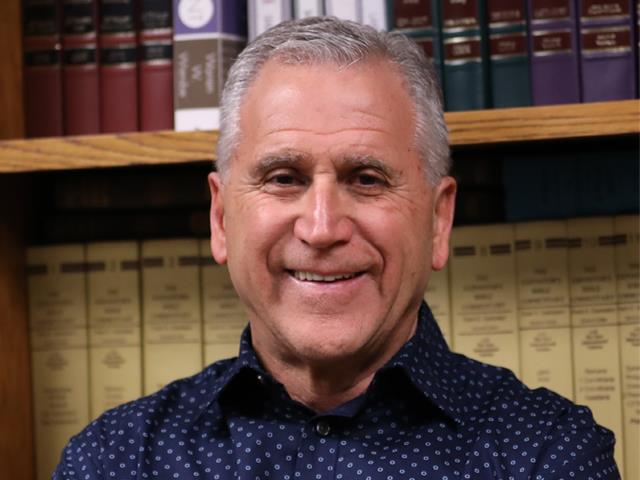
Today, Pastor Raul will share some practical insights about the purpose and parameters for taking communion. We’ll learn that this practice is not just about partaking of bread and juice on Sunday; it’s meant to remind us of the holy life we’re called to live when we accept Christ’s salvation. Learn more on Somebody Loves You with Pastor Raul Ries.
References
Raul Ries: Jesus wants a proper order for us to take that examination of our lives so that we can take the bread and the cup, not condemning ourselves and not with guilt, but freely because of the grace and the love and the mercy of Jesus Christ. I partake of this bread and I drink this cup, not in an unworthy manner, but in faith for the Lord Jesus Christ.
Guest (Male): Welcome to Somebody Loves You Radio, the Bible teaching ministry of Raul Ries in Diamond Bar, California. It is great to have you with us today as Raul continues our study of 1 Corinthians. He'll share some practical insights about the purpose and parameters for taking communion. We'll learn today that this practice isn't just about partaking of bread and juice on a Sunday; it's meant to remind us of the holy life we're called to live when we come to the Lord Jesus. The title of our study today is Church Order Understood. In 1 Corinthians chapter 11, here's Raul Ries.
Raul Ries: Imitate me, Paul says, just as also I imitate Jesus Christ. Now, I think that this is really important what he's saying here because he's asking them to renounce all personal advantages and rights in order to know Jesus Christ completely and fully. I think that's something that the church needs to understand and everybody individually, that to imitate Paul because Paul says, "I imitate Jesus Christ." I wonder how many times people that know us or don't even know us, they see that we're imitating Jesus Christ. I think that's the greatest witness that we can have: instead of preaching, to be able to imitate through our lives so that people can see that we truly are following the Lord Jesus Christ. Paul had such a great, great testimony and encouraging others to follow Jesus Christ. Verse two now, he begins the chapter. He says, "Now I praise you, brethren, that you remember me in all things and keep the traditions just as I delivered them unto you." He's talking about the teaching, apostolic teaching that he brought to the church. Paul here is commanding them to actually stay in the word of God. He says, "Remember when I came to you, I came to you and I gave you the word of God." Paul says, "I have preached to you the full counsel of God, the full counsel." So Paul was one of those guys that studied and he exhorted people to study the word of God. Verse three, notice what he says here. Here Paul now is going to introduce the subject of women's head coverings in the early church. He says, "But I want you to know that the head of every man is Christ, and the head of woman is man, and the head of Christ is God." Now he's given here the authority, divine ordained authority. God made man, and then man was put to sleep and then the woman was created. So Paul here is going to give good insight. Verse four, he says every man praying or prophesying, having his head covered or veiled, dishonors his head. He's actually saying here that in effect, if a man does not acknowledge Christ as the head of his life, that's what he's talking about. It is a great disrespect for him and for God if we don't put Jesus Christ as the head of our lives. Then he says this in verse five: "But every woman who prays or prophesies with her head uncovered dishonors her head, for that is one and the same as if her head were shaved." Now, this is something culturally now, because in that time, those women that were covered with a covering over their heads, they were prostitutes. And the woman that was not a prostitute would not wear a head covering. There were over a thousand prostitutes in the city of Corinth. And so Paul gives us an identity here, how to tell the one that is a married woman or single woman from the prostitutes as they would wear these coverings. Verse six he says, "For if a woman is not covered, let her also be shorn. But if it is shameful for a woman to be shorn or shaved, let her be covered." So in that culture, if you shave your head as a woman or cut your head real short, it was kind of a shame to do that. Now we're living in a different time, different culture. This was Greek culture he's talking about. Then in verse seven he says, "For a man indeed ought not to cover his head, since he is," notice, "since he is the image and glory of God; but woman is the glory of man." Why? Because man was created first, and then God created the woman after the man was created. Not that she's a second-class citizen, but that's the order that God gave to us. So here Paul gives tremendous insight to man and to women. Then he says in verse eight, "For man is not from the woman, but the woman is from man." Man was first created, and then God took one of the ribs, or the closest part of man's heart, and what did He do? He created a woman. A woman not to be inferior, but to be part of that man. So he gives the order here, and that takes you back to Genesis 2:18-25. Verse nine, this is God's order: "Nor was man created for the woman, but the woman for the man." Why? She's the weaker vessel. See, it's pretty cool how he puts it all here in order. "For this reason, the woman ought to have a symbol of authority on her head because of the angels." This is God's divine order for the woman. Notice that. Verse 11, nevertheless, notice equality, "neither is man independent of woman, nor woman independent of the man in the Lord." The balance that God gives to us in the Lord. One is not greater than the other; we are both the same as we become one with Jesus Christ. Verse 12: "For as woman came from man, even so man also comes through the woman, but all things are from God." I mean, there would be no man if the women didn't exist. You see? So woman is very important to what, as your wife, you can bring forth children. Every one of us came from a woman. But at the beginning, God created man and then man was lonely and what did God do? He gave her a woman. And that woman, through relationship, had other children and that's how the world began. And so here he gives us great insight. Verse 13: "Judge among yourselves. Is it proper for a woman to pray to God with her head uncovered?" That was a cultural thing. He says verse 14, "Does not even nature itself teach you that if a man has long hair, it is a dishonor to him? But if a woman has long hair, it is a glory to her; for her hair is given to her for a veil, as a covering." And then he says, "But if anyone seems to be contentious," notice again striving, "we have no such custom, nor do the churches of God." So he's talking about that custom of veiling. Don't get into striving and get into fights with people. Let the Holy Spirit convict people. Convict people. Now in the second part of chapter 11, now he's going to hit some pretty heavy things now. He's going to talk about the communion feast or the communion table. One of the things that I want to share with you tonight, this is important, because as he turns to the Lord's communion here or the Lord's supper, I believe that there are too many people today that can come once a month to receive the cup and the bread. Think of how many people take communion in an unworthy manner, not being fearful of what could happen to you. And so it's really important not to be fearful that way, but to really check your heart and take an examination of your life. Should I take the bread? Should I take the cup? Now, that's why we give a moment of silence for you to check out your heart and to be able to commune to the Lord and repent of your sins. But if you repent that morning for your sins, partake of communion and the moment you leave the church or Monday morning you go back into those sins that you really didn't repent, you took the communion unworthy and then God's going to deal with you.
Guest (Male): You're listening to Somebody Loves You Radio with Raul Ries, the Bible teaching ministry of Raul Ries in Diamond Bar, California. It is great to have you with us today as Raul continues our study of 1 Corinthians. He'll share some practical insights about the purpose and parameters for taking communion. Visit somebodylovesyou.com for our full array of resources including Raul's series Unity, Holiness and Love. We'll tell you how you can get your copy in just a few moments. But first, back to more with Raul Ries.
Raul Ries: So Paul now is going to establish the communion table. Look what he says beginning in verse 17. He says, "Now in giving these instructions, I do not praise you, since you come together not for the better for the worse." Now, remember in the early church, some of these people were coming... they didn't have a building, they come to the house. Like in the hippie days. You come to a house and you're going to eat with the Christians. And what was going on is that some of the people were not eating in their homes, but they were coming to the house when they were going to partake of communion and they were helping themselves to the food and they were not waiting. You know, it's like when you go to a potluck and you see the first people, they get in line and they take the bigger plates and then there's not enough for everybody else. They're called piggies, right? And Paul is saying, "Hey, don't be like that. When you go to the table, make sure you understand there are other people that haven't eaten. And if you're hungry, that much hungry, stay home and eat. But don't come into the presence of the Lord and be among your Christian brothers and be a little pig in what you're doing." That's literally saying. You'll see in a moment. Okay, verse 18. Look what he says. He says, "For first of all, when you come together as a church," so as Christians, right? "I hear that there are divisions among you and I part believe it." So they're still having those problems from the beginning. Dividing the body of Jesus Christ, striving. "While I'm of Peter, I'm of Paul." Causing divisions among the church. It is important that no division is ever caused among brothers and sisters in the Lord, especially in the church. God does not honor that. What does God want? He wants unity among the church. Unity, not disunity. Because look what he says in verse 19: "For there must also be factions among you, that those who are approved may be recognized among you." So he's talking about the sign of carnality and immaturity in the church. Those that cause contention and division among brothers and sisters, which means they're not in the word of God, they're not getting into God's word, they're not studying because they're contentious, they're trying to divide the body of Christ. And that's a sign of carnality. Instead of loving and forgiving, they don't do that. They want to divide the body of Jesus Christ. So then Paul says in verse 20: "Therefore, when you come together in one place, it is not to eat the Lord's supper." Notice that. And the Lord's supper that he's talking about is the Agape feast. It's called the Agape feast. When you would come to the Agape feast, you would have a meal and then you would partake of communion fully and completely in the body of Christ. They had like a potluck for each other. Then he says, "For in eating, each one takes his own supper ahead of others." You see? Little piggy here. He says, "You're going into the line and you get ahead of everybody and by the time people go to the line, there's nothing left because you took it all." Notice that. "For in eating, each one takes his own supper ahead of others and one is hungry and the other one gets drunk." Notice that. They were coming to the love feast and they didn't recognize that they were actually going to be in the presence of God. So they would come drunk and then eat and then they wanted to partake of communion. He says, "You can't do that. You cannot do that." Verse 22: "What? Do you not have houses to eat and drink in? Or do you despise the church of God and shame those who have nothing? What shall I say to you? Shall I praise you in this? No, I do not praise you." Notice that. "I rebuke you in the name of Jesus," he says here. Paul's rebuking them. He says, "How can you come into the presence of God, into His house, and partake and take advantage of everything that is being given to the brothers and sisters and you get in line first and come even drunk and partake of the meal and then try to partake of communion?" So now in verse 23 therefore he's going to establish it. Notice the importance here. "For I received from the Lord that which I also delivered to you." He says, "Why don't you guys study the Bible? That which I'm giving to you is what I received from the Lord from being in study with the word of God." You cannot give that which you first of all have not received from the Lord and then asking God to speak to you through the word of God, as Paul is going to say here in verse 23: "For I received from the Lord that which I also delivered to you, that the Lord Jesus Christ on the same night in which He was betrayed He took the bread." Now he's establishing the communion service. Why? Because Peter, James, and John were there when communion was taken. Paul, remember, came after Christ died, rose again on his way to Damascus, and he became a Christian. So he's giving the history back, how the apostles received communion. Then he says this again, verse 24: "And when He had given thanks," so he's given the order of communion. He takes the bread, now he prays, gives thanks, he breaks it, and then he says what? "Take and eat, this is My body which is broken for you and do this in remembrance of Me." Look at that. In remembrance of Jesus Christ, what He did for each one of us individually. Where did communion start? In Exodus chapter 12 when the children of Israel left Egypt. Verse 25: "In the same manner He also took the cup after supper, saying, This cup is the new covenant in My blood. This do as often as you drink it in remembrance of Me." Notice what he's saying there. When you take the bread and you take the cup, you're to remember who Jesus Christ, what He did for you. How He came and He humbled Himself and He submitted His will to the will of the Father. "Father, if this cup can pass from Me, if I don't have to take this wrath and if it's any other way show Me the way, but if not, I submit to You fully and completely." So here he's giving the picture of all of the communion service. Verse 26: "For as often as you eat this bread and you drink this cup, you're proclaiming the Lord's death until He comes again." Notice that. The meaning of communion. Verse 27: "Therefore whoever eats this bread or drinks this cup of the Lord in an unworthy manner will be guilty of the body and the blood of our Lord Jesus Christ." Wow. Mark that. He says right there, if you ever take in that sacred moment of Jesus Christ reminding us what we're doing and if you are playing the hypocrite taking the bread, taking the cup, and playing church, God says, "You know what? I'm going to judge you. I'm going to judge you." And God doesn't mess around. And I think of how many people here in Calvary Chapel and other churches, they'll come at communion and we always give that opportunity for people to repent and yet many of them do not repent and they partake of communion like nothing. And a lot of them come from that background of Catholicism where you go to the priest you actually confess your sins and then you partake of the communion. But they right back go back into sin. You see, it doesn't work that way. If you're going to partake of communion, you have to prepare your heart before the Lord, and not just on Sunday. But throughout the week as you partake of communion, you should have the presence of God in your life as you go to work or go to school so that people can see that you're really a Christian, not just a religious fanatic that's going to church. So it's really of importance that we understand the scriptures and what God says to us. And we need to remind ourselves of that, that communion is nothing to be taken lightly, but it's very serious when you and I partake and you take that bread in your hand and you take that cup that you remind yourself that this is what the Lord instituted. So the warning again: "Therefore whoever eats this bread and drinks this cup of the Lord in an unworthy manner will be guilty of the body and the blood of our Lord." Verse 28: "But let a man or woman examine himself first so let him eat of the bread and drink of the cup." Jeremiah 17:9 and 10: "The heart is deceitful, desperately wicked, who can know it? I the Lord know your heart." Before you partake of communion, check your heart out to make sure you're worthy of taking it. Because your heart is deceitful. Your heart will say, "Oh yeah, go ahead take communion." You better check it out. Because it's important that we understand that Jesus wants a proper order for us to take that examination of our lives so that we can take the bread and the cup, not condemning ourselves and not with guilt, but freely because of the grace and the love and the mercy of Jesus Christ. I partake of this bread and I drink this cup not in an unworthy manner, but in a righteous way in faith for the Lord Jesus Christ. Then he says this again, verse 29: "For he who eats and drinks in an unworthy manner eats and drinks judgment to himself, not discerning the Lord's body." That's the warning to every one of us. Mark it down and tell other people. If you partake of the Lord's bread and cup in an unworthy manner, then what does he say? Judgment will be upon yourself. Think of how many people from the past to the present and maybe to the future that have sat in Calvary Chapels or churches and have been playing games with God and they partake in the bread and the cup and then weeks later or months later or years later all of a sudden the judgment of God comes upon them, whatever it may be. Because he's going to tell you in a moment: some become sick, some become weak, and some even die. "For he who eats and drinks in an unworthy manner is eating and drinking judgment to himself, not discerning the Lord's body." Verse 30: "For this reason, many are weak, many are sick among you and many have died." Imagine how Paul here is writing to our generation, to our culture. Because he says, "For this reason many are weak, sick among you and many have died." So it could be very possible that in the body of Jesus Christ, sometimes these weak people is because of what they have done at the communion table. Or they're sick because of this, and many from the past to the present have died. Why? Because the way they partook of communion in an unworthy manner. No conviction, but they didn't really care. And then God had to intervene and to step in. Then he says this: "For if we would judge ourselves then we would not be judged. But when we are judged, we are chastened of the Lord." Notice that, chastened by the Lord. Hebrews chapter 12:3-11: a father has children, if his children don't do good, what does he do? He exhorts them and he disciplines them. And if he doesn't love them, he says, "You can do whatever you want to do, go ahead and do it." But if you really love your children, he says what? They're not going to get away with anything because you're going to correct them. You're going to discipline them. And in the same way, the Lord our God loves His children and what does He do? He disciplines us. He has ways of disciplining us: weakness, sickness, and death. And a lot of people don't like Corinthians because of that. Because here Paul exposes the church, how so many times people will be taken because they're not living right before God.
Guest (Male): We hope today's lesson has deepened your understanding of the uncompromising godly life you've been called to live. You're listening to Somebody Loves You Radio with Raul Ries. Today's study was titled Church Order Understood. If you'd like to get an unedited copy with much more teaching, we'll be happy to send one to you for a donation of $5 or more. All you have to do is call us at 800-634-9165. Now, we'd also like to tell you about Raul's practical 11-part series titled Unity, Holiness and Love. Available on CD and thumb drive, this resource will direct you in putting hands and feet to your faith as you honor the Lord with righteous behavior. You'll find that you can glorify God in everything from how you manage conflict to how you utilize your spiritual gifts in ministry. Visit somebodylovesyou.com or call 800-634-9165 to purchase Unity, Holiness and Love. We'll send you Raul's 11-message study on CD for just $23, or on flash drive for just $14. That number again is 800-634-9165. Our mailing address, if you'd like to order this resource by writing to us, is Somebody Loves You Radio, Post Office Box 4440, Diamond Bar, California 91765. We are grateful for your partnership in this listener-supported ministry. Every contribution you make is tax-deductible. And it's always our privilege to study the word of God with you, and we encourage you to join us again next time for even more wisdom from 1 Corinthians. Contemplating the Holy Spirit's distribution of spiritual gifts, we'll see that we can all accomplish more for the Lord when we work together in unity. This program is sponsored by Somebody Loves You Radio in Diamond Bar, California.
Related Episodes
Christian Liberty In The Church
Monday, August 3
Problems Relating To Marriage And Singleness Pt. 2
Sunday, August 2
Paul Defends His Right To Be Supported
Friday, July 31
About Somebody Loves You
'Somebody Loves You' program is designed to equip listeners with the necessary tools to live out their faith. 'Somebody Loves You' features Raul Ries' humorous, sensible and comprehensible teaching of God's Word.About Raul Ries
Raul Ries is the Senior Pastor of Calvary Chapel Golden Springs and President of Somebody Loves You Ministries. After his miraculous conversion in 1971, Raul began to read and study the Bible extensively even though he had a limited education. In 1974 he began a home Bible study with seven other committed individuals. Soon, he started to preach and counsel youth during the noon hour at his former high school, Baldwin Park High. Calvary Chapel West Covina grew out of Raul's home fellowship, as well as his Kung-Fu studio, and was soon meeting weekly at an old converted Safeway store. In 1993, the congregation moved to Diamond Bar and occupied a 101,000 square-foot corporate building on 28 acres. Calvary Chapel Golden Springs (as it is now called) draws between 10,000 - 12,000 in attendance weekly.
Author of several books, including Fury to Freedom (the story of his early life and dramatic conversion), Raul Ries has also produced three films: Fury to Freedom (feature film dramatization of the book); A Quiet Hope (a riveting and stirring documentary detailing seven soldier's accounts of the Vietnam War and its aftermath); and A Venture in Faith (a documentary of the history of the Calvary Chapel movement).
Contact Somebody Loves You with Raul Ries
Mailing Address
Somebody Loves You Radio
P.O. Box 4440
Diamond Bar, CA 91765
Telephone
(909) 396-1884


