Making the Most of Your Prayer Life - Part 1
Ministries > In Touch Ministries with Dr. Charles Stanley
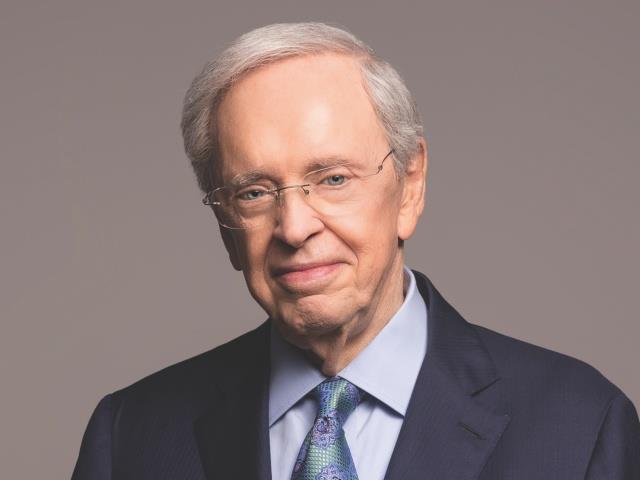
Our time alone with God is the most important part of each day—but we don't always prioritize it. Dr. Stanley teaches seven principles that will help Christians devote themselves to prayer. Sow into your prayer life and reap the benefits the Lord has for you.
Dr. Charles Stanley: Get dressed up for the battle of faith when you and I come to pray. In our personal prayer life, we are going to be attacked with all kinds of things from the telephone to a wandering mind, sleepiness, evil thoughts, you name it. Why? Because Satan hates praying people. Because of the awesome potential of a single person devoted to prayer, expect to be attacked.
Guest (Male): Do you look forward to spending time praying, or do you maybe think of it as merely fulfilling a required task? If enthusiasm toward your time with God is gone, stay with us for In Touch, the teaching ministry of Dr. Charles Stanley. Today you’ll hear how to recover vitality in your relationship with God as you listen to "Making the Most of Your Prayer Life."
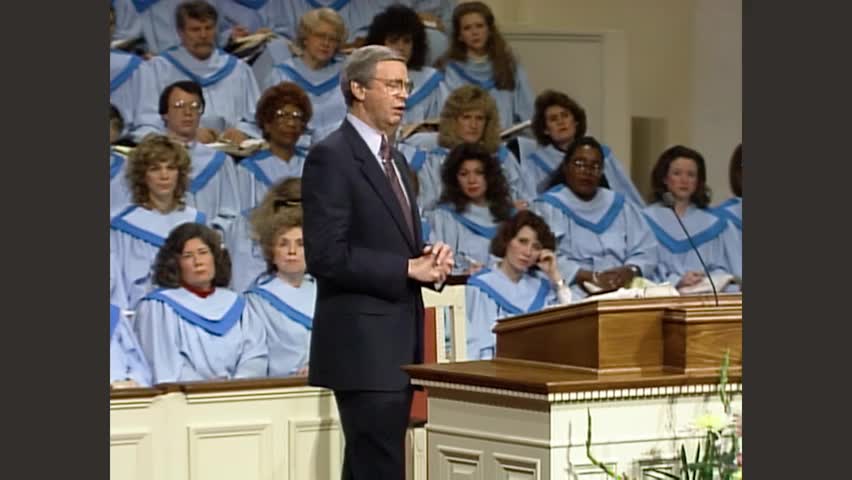
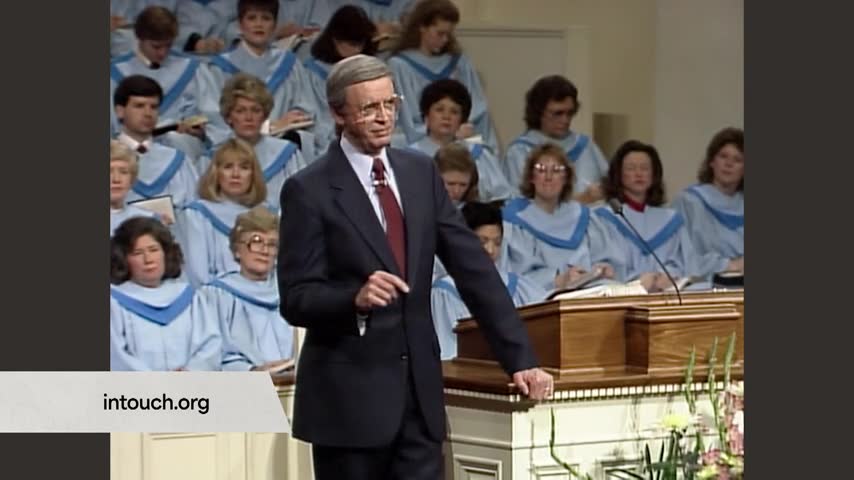
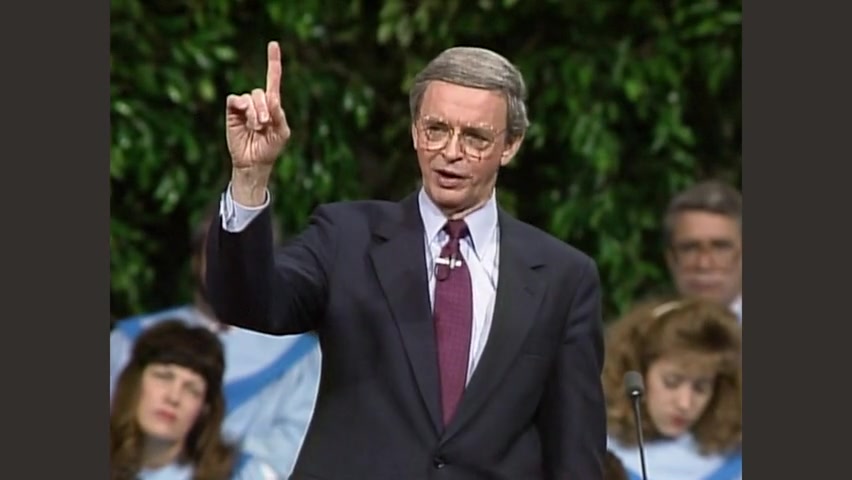
Dr. Charles Stanley: What is the most important event in any given day in your life? That is, what is it that seems to be first and foremost and uppermost in your thinking and the one thing that you're concentrating on above everything else on that given day? What's the priority of that day? Well, if you and I had asked Jesus that, we might be surprised at what he would have said. You might think, well, if I should ask Jesus that, he would probably have said either he's teaching that day, or he's preaching, or he's going to be healing, or he's going to be feeding. But one of those things certainly would be his priority. I believe if you and I had asked the Lord Jesus Christ what is the priority in his given day, on any given day, here's what he would say: it's the time I spend with my Father. You recall the scripture says that he was up early in the morning out alone with the Father praying. Then in the evening, he was alone with the Father praying. He said, "I only do those things that please the Father. I only do those things I see the Father doing. I take no initiative of my own." Jesus Christ was in continuous fellowship with his Father, but that wasn't just because he was God, but simply because he took time to be alone with his heavenly Father. I want you to turn, if you will, to Colossians chapter 4. Here, Paul gives us an admonition, and I believe in this passage he really deals with about every facet we need to deal with when it comes to praying. We'll deal with one primary part of it. In Colossians chapter 4, verse 2, he says: "Devote yourselves to prayer, keeping alert in it with an attitude of thanksgiving; praying at the same time for us as well, that God may open up to us a door for the word, so that we may speak forth the mystery of Christ, for which I have also been imprisoned; in order that I may make it clear in the way I ought to speak." Paul, in essence, says here's the attitude we should have in prayer. And secondly, he says this is what our prayer should cover. You'll notice he says that a door might be opened for greater ministry and that God would speak to him and show him how to speak the truth so that everyone could understand. Now, what I want to deal with primarily here in this passage is what he says when he says, "Devote yourselves to prayer." So let's talk about our personal prayer life for a moment. When he says, "devote yourselves to prayer," he's talking about persevering in it. That is, we're not talking about just quick prayers on the run, but recognizing the importance of it and making it the priority of our life. Devote yourselves to prayer. It is a word that speaks of strength, of stability, of endurance, and in fact, the real issue here is the issue of time. Devoting yourself to prayer means giving time to talk to the Father and to listen to him. So when he says to these Colossian Christians, "devote yourselves to prayer," he's talking about making a decision to set aside time where you and God fellowship with one another. Now, it's interesting, for example, Jesus didn't, when he was talking about prayer, did not say, "Now look, get a whole bunch of folks together and have big prayer meetings, have great prayer meetings." There's nothing wrong with that, but when Jesus talked about praying, what did he say for us to do when we pray? Go into your closet and talk to the Father, and what you tell him in secret, he will answer publicly. Jesus was strong on personal private devotion, prayer. And so should you and I be. But, of course, he was also for public prayer because in the first chapter of Acts, it says that they were devoting themselves to prayer in the upper room. In chapter 2, they were devoting themselves to prayer. In chapter 6, he says they were devoting themselves to the teaching of the word and to prayer. So, to devote myself to prayer means that I make it a priority. I give it the necessary time to make it what it ought to be. Now, let's think about something for a moment. We're talking about your own personal prayer life, keeping alert in it, he says, with an attitude of thanksgiving. Now let me ask a question: when you start praying sometimes, what happens to you? What happens to you once in a while when you begin to pray? For example, what's one thing? Your mind drifts. Right. All right. So what in the world makes your mind drift? Because it certainly isn't God. God isn't going to say, "Well, think about something else while you're talking to me." He's not going to say that. So if your mind drifts, and isn't it strange what it drifts on? What you're going to have for lunch, what you had for breakfast, what you're going to do tomorrow? And isn't it strange also, it drifts on things you think, "Goodness God, what am I doing thinking about that?" And isn't it amazing that here you are talking to the Creator of the universe, the omnipotent, all-loving God who genuinely loves you and who is listening to your petition because he wants to answer your prayer? And in the process of telling him what you're concerned about, you just drift off into something else. Well, what's a second thing that happens? You get sleepy. Right. And here we are, we're talking to our heavenly Father, and in the midst of it, we wake up and we feel guilty. Well, I used to feel guilty about that until I learned one of the greatest secrets of sermon preparation I learned by accident. Back here in the study, I have a prayer room. So what I would do is oftentimes I would just study and study and study, and I would go in there and pray about what I'd just been cramming in my mind and heart that I was working on in a message. Well, what I realized is I'd go fast asleep, and I'd think, "God, don't I love you enough to stay awake? Here I am asking you to lay a message on my heart, and here I am going to sleep in the prayer room." And so I would really berate myself about that until I learned the most fascinating thing. Listen, I would just cram myself full, my mind, and go in there and start praying, go fast asleep. But what I realized was that when I woke up and I got back to my desk, I couldn't write fast enough. My mind was so sharp because I'd filled my mind with the word of God, gone in there and talked myself to sleep talking to him. And so what happened is my mind got absolutely neutral, then God could rearrange things in my thinking so when I woke up, I mean, I found out that one of the greatest assets to sermon preparation is going to sleep. Now, I don't mean midnight. I'm not talking about that. I'm talking about in the midst of studying and going fast asleep. It's amazing what happens. Now, if you've watched television for three hours and then you go to sleep, that's your fault, don't blame that on the devil. But the devil is behind, I'm sure, drowsiness in our praying. That's why you shouldn't wait till you're about two-thirds asleep and you're yawning and you get down by the bed or you lie down in the bed and start praying and you wake up next thing you know it's morning. So drowsiness and sleep can be of the devil. What is a third thing that Satan will do when you are praying? Distractions. All right, that is, the telephone rings. Now I want you to think about something now. Here you are talking to God, Almighty God, who is the Sovereign of this universe, who has all power to do everything you ask him to do, who is genuinely, personally interested in you enough to listen to what you have to say. And the telephone rings, and you get up from talking to God to go talk to somebody you don't even know. Or it may be some friend, or it may just be something they want to talk about. Why in the world would you get up from praying and go answer the phone? And here's what you'd say: "It may be important." Important compared to what? If you and I are talking to God, there isn't anything so important. Now once in a while, I'll be praying and the telephone rings and it's just like God says, "Answer that." Not very often, but "answer that." And sure enough, it'll be something that I needed at that very moment, and sometimes, oftentimes something that I need to pray about. But usually, when the telephone rings, it isn't something you couldn't wait about. So I want you to think about this because, you see, it's amazing how many messages we send that we don't even realize. If I'm willing to get up off my knees and go answer a telephone when I don't have any idea what's going on at the other end of it, and it may be somebody trying to sell me something, and I leave God in order to go answer a telephone, there's something wrong within my thinking. And what it says is, I'm more interested in what's going on around me than I am the God who controls what's going on around me. So when Paul said here in this passage, he said, "Be watchful, be on the alert, keeping alert." Why? Because he knew what you and I have to deal with in prayer. Now go to Ephesians chapter 6. Let me show you something. Ephesians chapter 6, and all of us know what this passage says about putting on the full armor of God. For example, you recall he says in verse 10, "Be strong in the Lord and in the strength of His might." And "Put on the full armor of God," and we know what that armor is. He says the helmet of salvation to protect our thinking, the breastplate of righteousness to protect our emotions, our loins girded about with the girdle of truth that we walk in the truth, believe the truth, know the truth, stand in the truth, feet shod with the preparation of the gospel of peace as we share the gospel. He says the sword of the spirit, which is the word of God, and above all taking the shield of faith. Now, so we know that and we say, "Well, that's to protect us as we go about our life." But I want you to look at this in the 18th verse, what he says at the end of giving us all of this armor. Notice what he says: "With all prayer and petition pray at all times in the Spirit, and with this in view," what in view? "Being on the alert with all perseverance," the same word he uses in Colossians for devotion. "Be on the alert with all perseverance and petition for all the saints and to pray on my behalf." So do you know why he put that at the end? Here's the reason he did: because when is Satan going to attack you the most viciously? But when you are doing the one thing he hates and despises and fears above everything else. Listen, Satan doesn't fear anything like a man or a woman devoted to prayer. You become Satan's prime target and you are one of his choice enemies when you begin to devote yourself to prayer. Why? Because Satan knows that you have a relationship to God the Father that makes it possible for you to touch anybody, anywhere on the face of this earth, and that God can use you to impact people and nations and situations and circumstances and families. And the one thing he's going to do is get you sleepy, distracted, or somehow get your mind to wandering, or even think evil thoughts right in the middle of a prayer. Now, so you'll be honest, put mine up first. How many of you ever come up with some evil thought right in the middle of talking to God? What's your first response? "Where did that come from?" Well, we know where it came from. You see, that didn't come out of your heart. Here you are talking to God and here some evil thought penetrates your mind, that had to come straight from the devil. And what Paul is saying here is, "Listen, when you get ready to pray, you get dressed up." The helmet of salvation to protect your thinking, the breastplate for your emotions, the girdle of truth, the sword of the spirit, which is both defensive and offensive, and above all, he says, the shield of faith. That word for shield is a Greek word used for door. We're not talking about one of those round shields; we're talking about one of those big shields that's the form of a door that oftentimes they would set up, get down behind it, and be totally, completely protected by. And what he's saying is get dressed up for the battle of faith when you and I come to pray. In our personal prayer life, we are going to be attacked with all kinds of things from the telephone to a wandering mind, sleepiness, evil thoughts, you name it. Why? Because Satan hates praying people. He hates them because they're his greatest enemy. You see, he doesn't hate preaching nearly as bad as he hates praying. And so therefore, when you and I think in terms of devoting ourselves to prayer, because of the awesome potential of a single person devoted to prayer, expect to be attacked because he's going to attack you one way or the other. So as you think about what he says here, he says, "Be on the alert." He says, "Be on the alert when you begin to pray, persevere, devote yourself, set aside time, devote yourself to it," and he says, "be on the alert." Then he says, "With thanksgiving." If you'll notice in the third chapter, he says here three times in three verses right together, verse 15, 16, and 17, he speaks. He says in verse 15, "and be thankful." We're back in Colossians 3 now. Verse 16, he says "thankfulness in your hearts to God." Verse 17, "giving thanks through him to God the Father." Why all this emphasis on thanksgiving? And why this emphasis in thanksgiving in prayer? Now watch this. No matter what you and I asking God for, and this doesn't always come quickly, nor does it come easy, but he says "be on the alert with thanksgiving." Now watch this: if I can bring my petition to God, and in bringing my petition I can genuinely thank him for answering my prayer, what I have done is I have expressed faith right up front. "God, I'm going to thank you for hearing and answering my petition." And so thanksgiving is a beautiful mix of petition with thanksgiving, which ultimately results in our faith. That is, that is an expression of faith when I am able to thank him for that. Now, if you're going to have a prayer life that really makes a difference, that's going to have any impact, having an impact on your life, the lives of other people, the four things I believe are essential. Number one, and that is to set a definite time. If you don't, you won't devote yourself to prayer. It doesn't happen. And the reason I know that is because since Satan hates that above every other activity you and I engage ourselves in, he's going to do everything in his power to keep you busy. To keep you busy so you can say, "I don't have time to pray." Now think about this: this God of ours who's given us 24 hours in every day could take us out just in a split second if he chose. For me to tell God I don't have time to talk to him, none of us would think that's reasonable. We don't have time to talk to God who is the source of every second, every heartbeat. And if Jesus spent his mornings and his evenings in prayer, and all of us have enough problems and heartaches and burdens and trials and tribulations in life and friends who have them and a whole world out there that's hurting, all of us have enough to need to go to him often and talk to him. Set aside a time; if you don't, it won't happen. Number one, a time. Secondly, a place. A place where you and God get together, where you battle it out with those things that you and he just need to deal with privately in your life. There's something about a place. Here's what it is: once you have a place, somehow when you get to that place, you are more ready to pray than if you're just praying hither and yon and in this place, that place, and the other. Because that's what you do there. My mom made me a number of Afghans when she was alive, and one of them, the first one she gave me, I brought it and put in this prayer room back in. It's been there ever since I've been the associate pastor of this church. And I have one at home, and when I walk in my study, that's the first thing I see. You say, "Well, is that a security blanket?" Brother, you better believe it is, because it keeps me reminded of where my security is, and it can only be found in this world in one place, and that's Jesus. The third thing is a purpose. If you don't have a purpose, you won't pray. You'll just pray here and yon and as things arise in this, that, and the other. You'll pray a little bit here and there, but you won't pray much. What's the purpose? Now, here's the purpose. The purpose ultimately is not to get something from God. And I don't know when I discovered this in my own life, but I can remember thinking this and thinking, "Dear God, how could I have missed this?" Most people's primary purpose for praying is getting something. You know what God sees our primary purpose for praying? Developing an intimate, warm, personal intimacy with him. You see, giving you and me things, that's no big deal with God. But this is a big deal: bringing us from the distractions of the world into a warm, intimate, personal relationship with him so that we want to talk to him. You see, what happens is it's in those times you and I get to know him. And you don't get to know God very well just asking him for this and give me that and help that one, bless this one, bless this and provide this and provide the other. There's something about spending time alone with him. And the purpose needs to be to get to know him. How does he operate? Who is this God I love? Who is this God I serve? What is he really like? Lord, just show me. Here's what happens: when you and I turn our hearts toward him, he begins to unveil himself to us. We begin to see and understand the ways of God that we never understood before. And I'm here to tell you, you listen to 10,000 sermons, and you'll never get what you get on your face or on your knees or in your chair sitting before the Lord just listening to him. Because that's just you and him. That's just you and God talking.
Guest (Male): You’re listening to In Touch, the teaching ministry of Dr. Charles Stanley. God wants to encourage, guide, help, and strengthen each of his followers, but he doesn't shout at us. Make time each day to quietly talk with the Lord and surrender to his instruction. If you're wondering how to develop a lifestyle of trusting God, search through our many online resources at intouch.org. A replay of this lesson is also located on our website; just look for "Today on Radio." And to order a copy of Dr. Stanley’s complete message, "Making the Most of Your Prayer Life," visit our online store. Our web address again is intouch.org. Call or text to 1-800-INTOUCH. If you prefer, you can write to us at In Touch, Post Office Box 7900, Atlanta, Georgia 30357. We don't normally use suffering and beneficial in the same sentence, but when we respond to hardship the right way, we draw closer to God. Today’s moment with Charles Stanley is coming up.
Guest (Male): In Touch Plus is streaming on Local Now, featuring all the best of Dr. Charles Stanley.
Dr. Charles Stanley: It's important to have strong convictions based on the word of God. He's working out things that you and I would never know about in our future.
Guest (Male): In Touch Plus, your streaming network for quality Christian programming 24/7. Now watch this: In Touch Plus, streaming free on Local Now. Jesus told us in Matthew 28:19...
Related Episodes
Strengthening Our Wavering Faith - Part 1
Saturday, October 3
Encouragement for Every Season of Life - Part 2
Friday, October 2
Encouragement for Every Season of Life - Part 1
Thursday, October 1
Related Videos
About In Touch Ministries
In Touch Ministries is the broadcast teaching ministry of Dr. Charles Stanley.
About Dr. Charles Stanley
Dr. Charles Stanley
September 25, 1932 – April 18, 2023
Dr. Charles F. Stanley was the senior pastor of First Baptist Church Atlanta for more than fifty years. He was also the founder of In Touch Ministries and a New York Times best-selling author, who wrote more than seventy books encouraging people to seek Jesus as their Savior and know Him as their wise and loving Lord.
Known to audiences around the world through his wide-reaching TV and radio broadcasts, Stanley modeled his 65 years of ministry after the apostle Paul’s message in Acts 20:24: “Life is worth nothing unless I use it for doing the work assigned me by the Lord Jesus—the work of telling others the Good News about God’s mighty kindness and love.”
Contact In Touch Ministries with Dr. Charles Stanley
Mailing Address
In Touch Ministries
PO Box 7900
Atlanta, GA 30357
Phone Number
1-800-468-6824


