How to care for your contact lenses properly
Lifestyle

Audio By Carbonatix
8:00 AM on Tuesday, May 12
By Tom Determan for Eyemart Express, Stacker

How to care for your contact lenses properly
Contact lenses are a practical and convenient way to enjoy better eyesight. While some people may prefer glasses, there are many benefits to contact lenses — they're highly portable, easy to apply and unnoticeable to others once they're in. But to use your lenses safely, you need to know how to care for them properly.
Proper care requires a structured and informed daily routine. Learn how to care for your contact lenses in this guide by Eyemart Express.
Key Takeaways
It's important to use the right care systems and solutions for your contact lenses.
- You can take simple steps to care for your contact lenses, such as washing your hands and cleaning your lens case.
- Avoiding common mistakes, like sleeping with your lenses in or rinsing them with water, can protect your lenses.
- You may need to adjust your care routine when you travel.
- Ineffective contact lens care can result in eye irritation, infections and more.
Contact Lens Types and Their Care Requirements
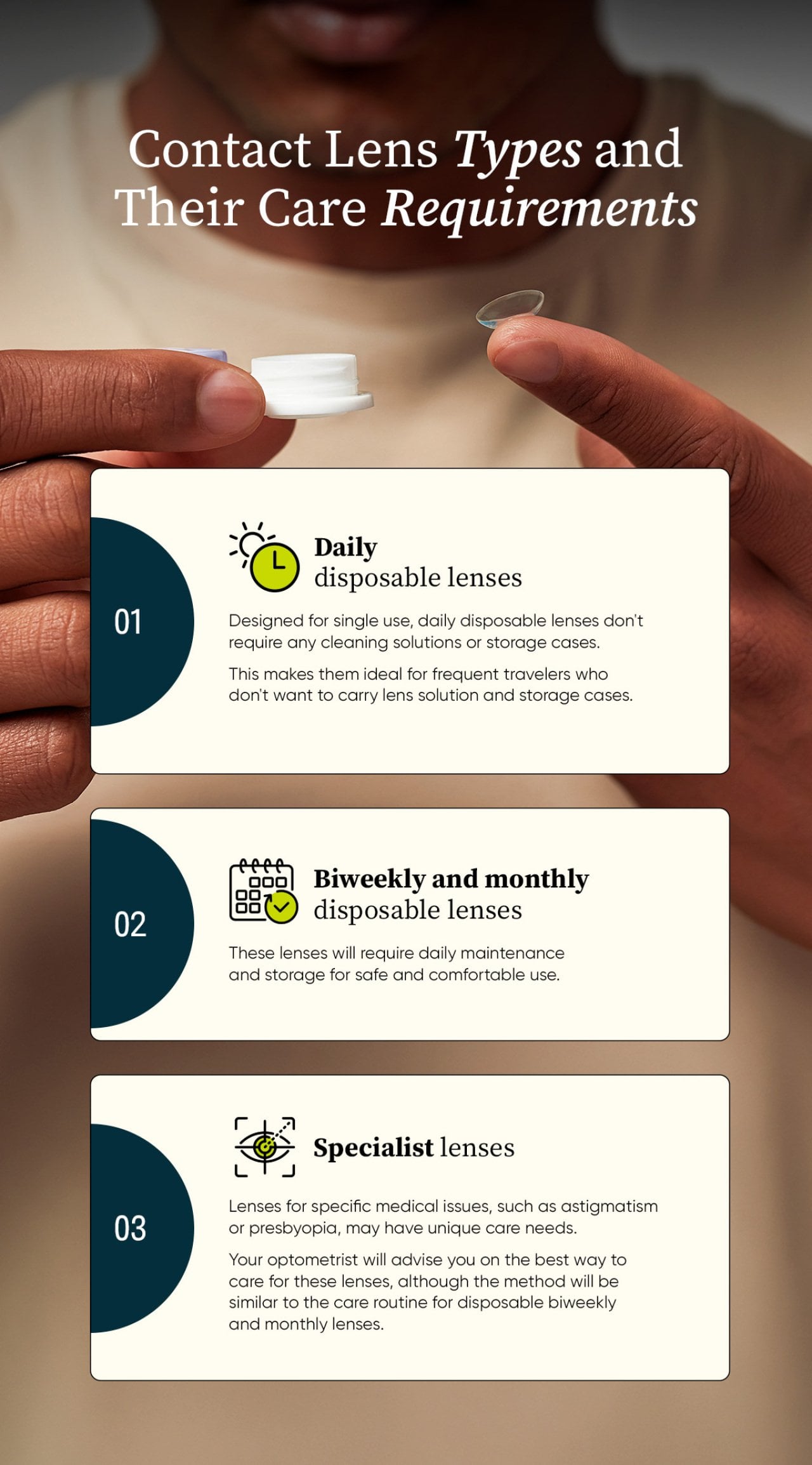
Before you can create the right care routine for your contact lenses, you need to know what type of lenses you have:
- Daily disposable lenses: Designed for single use, daily disposable lenses don't require any cleaning solutions or storage cases. This makes them ideal for frequent travelers who don't want to carry lens solution and storage cases.
- Biweekly and monthly disposable lenses: These lenses will require daily maintenance and storage for safe and comfortable use.
- Specialist lenses: Lenses for specific medical issues, such as astigmatism or presbyopia, may have unique care needs. Your optometrist will advise you on the best way to care for these lenses, although the method will be similar to the care routine for disposable biweekly and monthly lenses.
Contact Lens Care Systems and Solutions
You can use several care systems and solutions to look after your lenses. The ones you use will depend on the type of lenses you have, whether your eyes tend to form protein deposits and whether you have any allergies. Each care system and solution also works differently, so it's important to know the correct way to use each one.
Multipurpose Solution
The most common care system for soft contact lenses, multipurpose solution cleans, rinses and disinfects your lenses. The solution is placed in your lens storage case so that it works away at your lenses whenever you store them. However, fresh cleaning solution is needed every time you place your lenses in their case, because old solution becomes less effective over time.
Hydrogen Peroxide-Based Systems
Like multipurpose solution, hydrogen peroxide-based systems both clean and disinfect your lenses, which is why they're a common alternative for those who are allergic to multipurpose solution. This care system works by turning hydrogen peroxide into saline as you store your lenses in a purpose-built case. Without this case, the solution can cause discomfort when you put your lenses in.
Remember — don't apply lenses stored in hydrogen peroxide solution until the solution has neutralized in your lens storage case. Thanks to its preservative-free nature after neutralization, this care system is often preferred by those with sensitive eyes.
Daily Cleaning Solution
Daily cleaning solution quickly removes debris and deposits from your lens. However, since it doesn't disinfect your lenses, it can't be used as a stand-alone solution. Instead, it's designed to supplement other care systems that can disinfect, rinse and store your lenses.
To use daily cleaning solution, simply deposit a few drops into your palm and rub the lens on both sides. Afterward, you can use your designated lens care system.
This type of solution is particularly effective at breaking down protein and lipid deposits that can accumulate on lens surfaces.
Saline
Saline solution can't disinfect your contact lenses, so it shouldn't be your sole cleaning solution. Instead, it serves as a rinsing agent to wash away any remaining debris and chemical residues, ensuring the lens's pH levels are safe for eye contact.
Certain care systems, such as hydrogen peroxide-based systems, may need to be rinsed with saline solution after cleaning.
Rewetting Drops
Some people experience dry eyes when using contact lenses, but rewetting drops can remedy this. By hydrating the lenses, rewetting drops prevent them from becoming sticky and hampering your vision. You can apply these drops to your contact lenses while you wear them.
If you frequently use rewetting drops, consider preservative-free drops, as an accumulation of preservatives in your eyes can irritate them. You can also get drops with varying levels of thickness — thicker drops are better for drier eyes.
Rigid Gas Permeable (RGP) Care Systems
RGP care systems are used to care for hard contact lenses, and can't be used on soft lenses. Since most people use soft lenses, RGP care systems are uncommon. Those who use RGP care systems will still need separate solutions to clean and disinfect their lenses.
How to Protect Your Contact Lenses
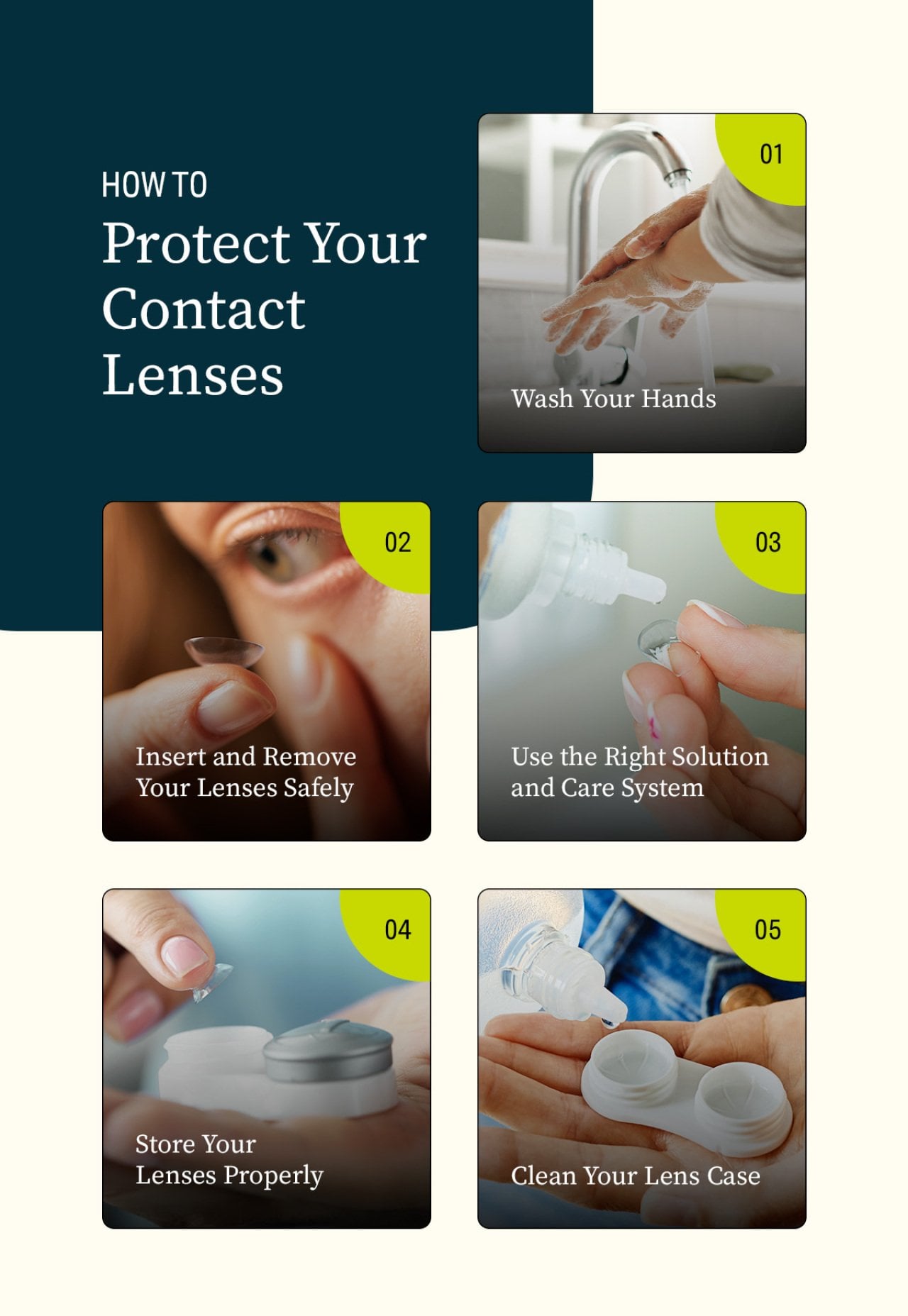
Protecting your contact lenses starts with a good daily routine.
Wash Your Hands
Dirt and debris are one of the most common reasons why people experience issues with their contact lenses. Often, this dirt is transferred from your hands as you handle your contact lenses.
Wash your hands with a mild, non-moisturizing soap. Then, dry them with a clean, lint-free towel to prevent debris, bacteria and oils from contaminating your lenses.
Whether you're inserting, cleaning or storing your contact lenses, washing your hands before you touch your lenses reduces the chances of transferring dirt or debris.
Insert and Remove Your Lenses Safely
Using the correct technique to insert and remove your contact lenses is key to keeping them hygienic while also ensuring a comfortable fit.
Follow these steps when inserting your lenses:
- Remove the lens from its case and ensure it's not inside-out by checking that the edges curve upward like a bowl, rather than outward.
- Place the lens on the tip of your dominant index finger.
- With your dominant middle finger, pull down your lower eyelid.
- With your other index finger, pull up your upper eyelid.
- Look either slightly upward or straight ahead as you place the lens on the colored part of your eye.
- Release your eyelids gently and blink softly a few times to settle the lens.
To remove your contact lenses, gently pull down your lower eyelid. Use the pads of your thumb and index finger to carefully pinch the lens off your eye.
Use the Right Solution and Care System
Optometrists recommend care systems and solutions based on your contact lenses and how you use them, so it's important to use the correct equipment. Using the wrong care system or solution could:
- Leave your lenses improperly cleaned.
- Irritate your eyes.
- Damage your lenses.
Store Your Lenses Properly
Storing your lenses in their dedicated case is vital to protecting them from any damage. Your case shields your lenses from environmental contaminants like dust and harmful bacteria, and stores them in a disinfecting solution when you're not wearing them.
When storing your lenses in their case, be sure to put each lens in its designated chamber. Ensure each lens is fully submerged in solution, too. Keep your case in a cool, dry place, as heat can compromise the lens material or solution.
Clean Your Lens Case
Your lens case can quickly accumulate dirt as you store and clean your lenses in it, so clean your case daily. You can do this by rinsing it out with unused contact lens solution, then leaving it open to dry.
Even with regular cleaning, you should replace your lens case every three months. If your case becomes damaged, replace it immediately.
Common Lens Care Mistakes to Avoid
Learning how to care for your contact lenses effectively can take time. Some of the most common mistakes people make include:
- Reusing solution: Whatever type of lens solution you use, it's only designed to be used once, after which it's no longer sterile. Once it's unsterile, lens solution can quickly become a breeding ground for harmful bacteria.
- Using tap water: Rinsing your contact lenses with tap water can increase the risk of eye infections due to bacteria in the water. Even bottled drinking water can pose a risk of infection.
- Overwearing lenses: The longer you wear your lenses, the more likely they are to become scratched or dirty, which increases the risk of eye infection. Overusing contact lenses can also cause blood vessels to grow into your cornea and potentially harm your eyesight.
- Sleeping with your lenses in: Unless your optometrist prescribes you contact lenses that are designed to be worn while sleeping, sleeping with lenses in can increase the risk of eye infections. This happens because your eyes experience oxygen deprivation, reduced tear exchange and an accumulation of debris under the lens while you sleep.
- Ignoring discomfort or redness: If you experience pain or irritation while wearing your contact lenses, it could be because you aren't properly caring for them. Speak to your doctor, who will check your care technique and whether you may be allergic to your lenses.
- Swimming with your contact lenses in: Whether it's in the sea, a lake or a swimming pool, water can contain bacteria and parasites. Contact lenses can trap these germs against your eye and cause various eye infections. If you must swim with lenses in, use daily disposable lenses and watertight goggles, and remove your lenses immediately after swimming.
Lens Storage and Travel Tips
Traveling with contact lenses may affect how you care for them. When you travel, consider your:
- Destination's temperature: If you're traveling to a warmer destination, you may experience dry eyes more regularly than usual.
- Destination's altitude: If you're traveling to a higher altitude, your eyes may become drier than usual due to the reduced oxygen levels.
- Luggage allowance: If you want to minimize the space needed for your contact lenses and solutions, take small bottles of lens solution.
- Emergency solutions: Always bring extra solution in case you lose or spill yours, as there's no guarantee you'll be able to find more at your destination.
- Flight duration: If you're taking a long-distance flight, consider packing lens solution or rewetting drops in your carry-on bag. The air on the plane will typically be drier than you're used to, causing your eyes to dry out more quickly than usual.
If you're worried about keeping your contact lenses clean while you're away, consider switching to daily disposable lenses.
Why It's Important to Care for Your Contact Lenses
Improperly maintained contact lenses can:
- Require more frequent replacement.
- Dry out your eyes.
- Irritate or damage your eyes.
- Cause eye infections.
- Create corneal ulcers.
- Cause lens intolerance.
If you notice any discomfort, pain or redness when wearing your contact lenses, contact your optometrist. They may offer advice on how you can improve your lens care routine, or suggest alternative lenses or solutions.
Why Regular Eye Examinations Are Important
While it's vital to care for your lenses during your daily routine, you also need to have your eyes checked regularly to safely enjoy contact lenses. Adults should get eye exams annually, while children need them yearly once they reach school age.
During your appointment, your optometrist can assess your eyesight, update your prescription and check your overall eye health. They'll check your corneas, eyelids and the surrounding tissue for any signs of damage or irritation, which could suggest that your lenses aren't perfectly suited to your eyes.
If your optometrist notices any signs of damage or irritation, they may recommend a new prescription or care routine.
Protect Your Contact Lenses
From the right prescription to careful use, several factors allow you to fully enjoy contact lenses. Sticking to a proper care routine is one of the most important steps, including using the right care solutions and washing your hands before touching your lenses.
By properly caring for your contact lenses, you can protect your eyes from irritation and infections, while also enjoying your lenses for longer. Consult your optometrist to get tailored contact lens care tips and discuss the best routine.
This story was produced by Eyemart Express and reviewed and distributed by Stacker.


